Showing posts with label Spring. Show all posts

Sunday, November 10, 2013

Vacationing

 
Isn't it nice to get away every now and then? To have a change of scenery and the opportunity to slow life's pace down a bit.
 
A few days by the seaside is a wonderful way to do it.


Sunday, October 20, 2013

Summer's Doorstep

 
Our house is over 100 years old. For more than a century it has had to endure a lot of weather, but nothing as hot and as extreme as last summer. With the BoM predicting a repeat this coming summer, we have been busy trying to come up with cost-effective and energy-efficient solutions to stay cool during what looks to be another extremely hot and prolonged summer season. The thought of having to run the air conditioning for weeks on end - yet again - troubles me.
 
Our house already provides us with many advantages: The original part of the house is made of stone and each wall is approximately a foot thick. Combined with high ceilings and small windows, it takes longer to heat up than its modern counterparts. On days like today, where the temperature is expected to near 40 (degrees Celsius), we shouldn't have to turn on the air conditioning. It's only when we experience successive days of extreme heat that it begins to penetrate through to every corner of the house.
 
I have been told that the trick to keeping an old stone house like ours cool during the hottest part of summer is to keep the stone on the inside of the house cool to the touch. Our biggest challenge, however, has nothing to do with stone: The back of the house (where the kitchen, laundry and bathroom are located) is a weatherboard extension with paper-thin walls and a low ceiling. A galvanised iron veranda then extends out from the back door, which bears the brunt of the sun from dawn until mid-afternoon. It gets hot under that veranda and in those back rooms very quickly during a hot spell. This heat then moves through the rest of the house making it warm and stuffy, and quickly heating the interior stone from the inside-out. It is at this point that the air conditioning is switched on in order to try and cool the house back down.
 
It got Shane and I thinking: If we can keep the heat to a minimum at the back of the house, it should be a lot easier to keep the rest of the house cool. The easiest, most cost-effective solution was for us to erect blinds around the edge of the back veranda. They do not block out the light entirely, but the light colour helps reflect the sunlight, the fabric allows for airflow, and the blinds themselves provide ample shade.
 
The seasons have been warmer than average all year; it has barely rained at all since the end of winter, humidity is low and every few days we are cursed with a burst of heat and northerly winds that have the potential to make things very uncomfortable, very quick. The blinds have been up for just over a fortnight, and already they are proving far more effective than we could have hoped. This past week we even remarked that it was quite chilly indoors.
 
But then again, it isn't summer just yet. It shall be interesting to see what difference these blinds make to the conditions on the inside of the house when summer is at her peak.


How do you combat the summer heat?
What tested and tried methods can you recommend for keeping a house cool?


Sunday, September 22, 2013

Ostara

 
Today is the spring equinox in Australia, that time of year when light and dark are in equal measure. From here on in, however, the days will become longer than the nights as we progress into summer.
 
It is gloriously sunny, possibly a little too warm today. It may be the time for spring but there are certainly many signs of summer about the place: Clear blue skies, dry ground, bees, bugs and FLIES. On the days when it's not windy (that's just September in the Ranges, I'm afraid), the days are what many would consider to be rather perfect. It's a shame that spring is such a short season here: No sooner have we emerged from our winter snug than it is time to retreat back indoors for summer hibernation...
 
But I'll dwell on that another day.
Right now I just want to be out in the garden, enjoying the sunshine.


Saturday, August 31, 2013

Native Anthem


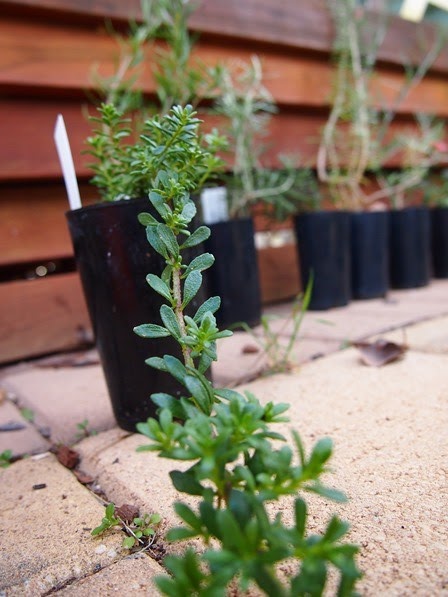
Yesterday afternoon I ventured down to Stirling North, just outside of Port Augusta and around 30km from where I live, to visit a 90-year-old gentleman who propagates and sells native Australian plants.
 
It was a true adventure of new-found knowledge and discovery. In the past I have been reluctant to grow many Australian native plants for fear they would make the garden look untidy and dull. Yesterday's adventure made me realise just how fantastic a native Australian garden can look with a bit of planning and attention. I discovered that the key to having a fabulous native garden is in the pruning: Leave them to grow wild and they will split, look shabby, produce few blooms and won't live as long. And as it turns out, they are not hard to manicure at all: From about their second year (when they reach about 1.5m in height) they should be pruned back by a third once they have finished flowering in spring. This will ensure the bush stays "tight" and bursts with flowers every year.
 
And it's the flowers that I am most keen to see plenty of in my garden. Whilst manicured looks splendid, a garden isn't all that fun without splashes of colour and the regular visits from the native bees and honey-eaters (birds). We lost a number of shurbs preferred by the honey-eaters last summer and I am keen to ensure their return.
 
Last spring I planted two "test" eremophilas - a groundcover and a silver shrub - to see whether they would survive the summer heat and how well they would grow in our hard, clay soil (which manages to annihilate even the hardiest lavender, a popular garden plant in Australia). As it turns out, they are thriving. Eremophilas only need to be watered until they are established, after which they should be left to their own devices (unless, of course, they are looking a little "thirsty"). They make the perfect water-wise garden for arid and desert conditions. Seeing my test plants grow so well over winter (which has seen them treble in size), I made the decision that a native garden might be just what we need to achieve the manicured, evergreen and colourful garden we want.
 
So, after learning how to grow and prune native plants perfect for our climate from the expert (the gentleman in question pioneered the world-renowned and one-of-a-kind Arid Lands Botanic Garden in Port Augusta), I came home with a selection of eremophilas (trees, shrubs and groundcovers) and a purple lantana, which will go in-ground next weekend. With prices ranging from $2 - $4.50 per tube, a mere $30 spent and I came home with 11 plants. Now I just need to decide where to put them!


Saturday, August 24, 2013

Hello, Blossom.

 
I am so pleased to see our apricot tree in bloom again this year, especially after the hard prune it had earlier this winter. It had a bit of gummosis and was looking a little scraggly, so we cut it back to half its size, removing the branches suffering the gummosis in the process.
 
It will be this tree's third season in our garden, and hopefully it has endured the last of its hard prunes. All signs of gummosis are gone. It's also great to see the blossoms on the remaining branches and new growth from the stems. I'll be absolutely delighted if we happen to get fruit again this summer.


Sunday, August 11, 2013

Sunday Drive


August rarely fails to deliver beautiful days in this part of world. Anyone thinking of visiting our region should do so in August.
 
Knowing that rain was due to start falling again this evening, we decided to take a leisurely Sunday drive through the Ranges this morning. All the rain we've had over the past two months has made the everything wonderfully green, and now the wildflowers are starting to bloom, adding an extra splash of colour to the landscape.
 
Our drive took us well out of town, past farmhouses and old ruins, down into valleys and over hills, and through sleepy tiny townships with just a handful of buildings.


Friday, August 2, 2013

Imbolc

 
In Australia, the 2 August is Imbolc.
 
Imbolc falls midway between Yule (winter solstice) and Ostara (spring equinox), and marks the beginning of spring. 
 
Despite a few grey clouds passing overhead around mid-morning, today was mostly uninterrupted sunshine, and if it wasn't for a chilly southerly breeze blowing in over the Ranges, it would probably have felt very much like spring indeed.
 
I even started some spring cleaning.
 
This evening it rains again, and the rain is expected to continue in a very winter-like fashion for the remainder of the weekend. However, if there is one place that truly reveals the changing of the seasons it is the garden, and there are many early signs of spring in ours.
 
Although, I'm not entirely sure I'm ready for winter to be over just yet...
 

[Seed pod on the native hibiscus]

[New growth on the geraniums]

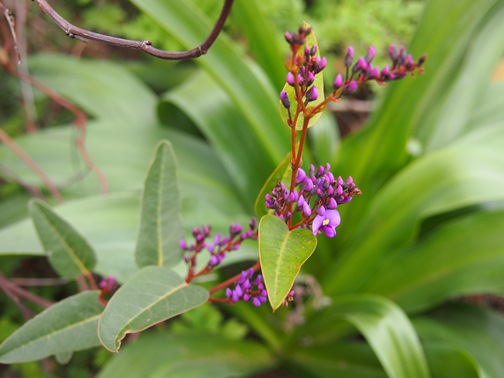
[Hardenbergia violacea - aka native wisteria]

[The first buds on the lemon tree]

[Delicate, tissue-like Rosemary blooms]